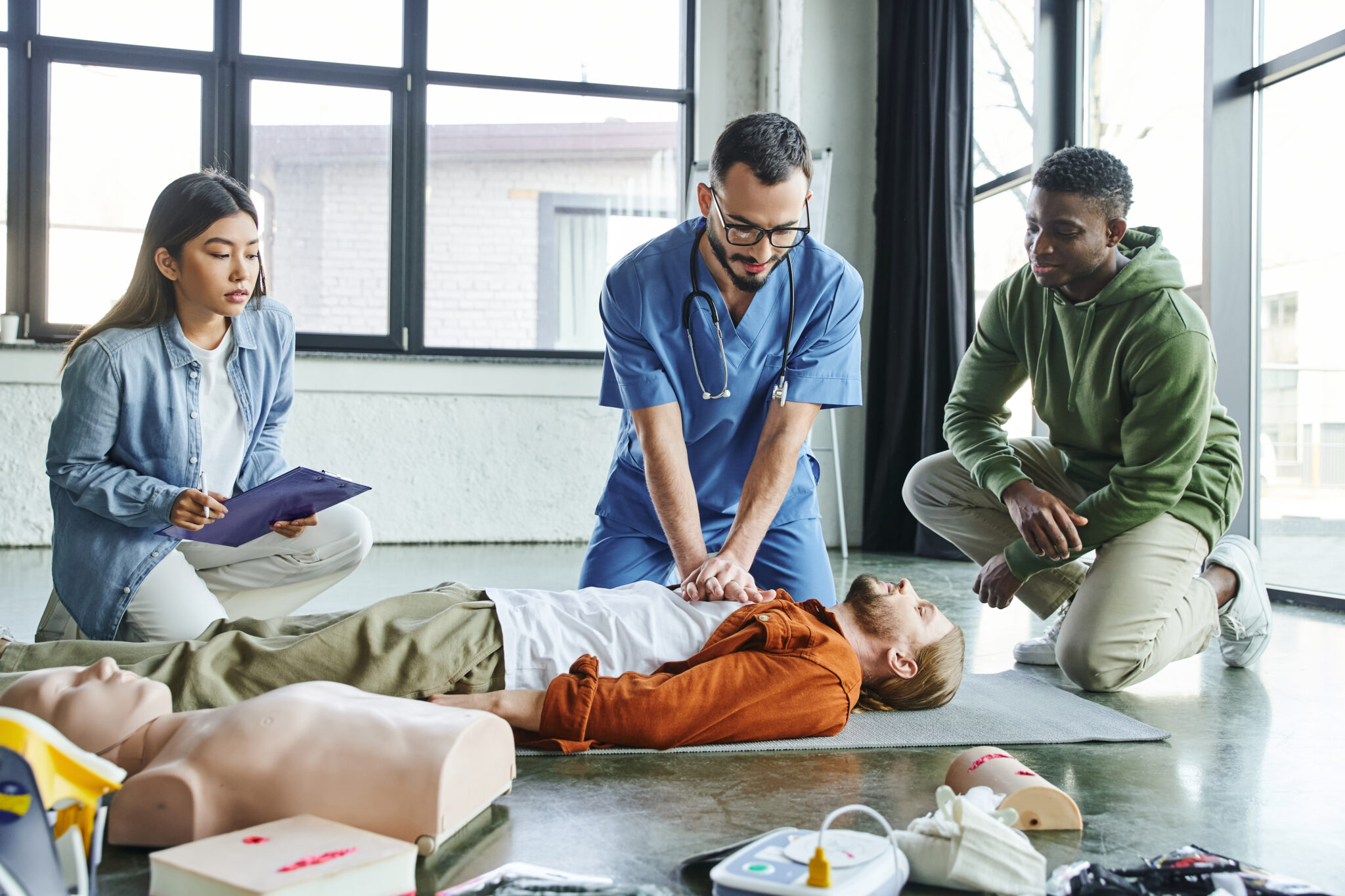
When you being in a first aid training area for the very first time, manikin on one side and a stack of gauze on the various other, the abstractions that swirl around emergencies turn into muscle memory. You find out where to place your hands, how tough to push, what to state to emergency situation dispatch, and which blunders to avoid when secs count. The worth of a first aid course is not theoretical. It is measured in the calmness you carry into chaotic moments, and in the end results that follow.
The genuine reasons people enroll, and why they stick to it
Most individuals walk right into a first aid and CPR course with a work need or a family incentive. A new parent wants confidence around choking threats. A coach needs accreditation prior to the season begins. A construction foreman is in charge of a team spread across an active task website. By the end of a solid program, those checkboxes matter less than the clear, practiced judgment they acquire. They leave understanding just how to evaluate a scene in 3 breaths, how to direct spectators, and just how to change efficiently when paramedics show up. Those behaviors, as soon as discovered, have a tendency to remain. I have actually seen former students step in at a farmers' market, at a swimming pool deck, and on a bus, reacting emphatically and acquiring valuable time.
Confidence under pressure is a skill you can build
People overstate what they will recall under anxiety. Heart prices surge, great motor abilities drop, hearing narrows. The remedy is purposeful method. Great first aid courses mimic realistic stress with timed drills and role-play. You rehearse calling 000 or 911, relocating furnishings to produce room for compressions, and utilizing an AED with a drinking hand. The first repetitions feel awkward. By the third or fourth cycle, you are counting compressions out loud, switching rescuers at the best mark, and reconsidering for breathing automatically. That rep wires a script you can run when the adrenaline hits.
This is additionally why a CPR refresher course matters. Guidelines evolve every couple of years, however more vital than updates are the tune-ups to your technique. I have enjoyed seasoned team drift from the recommended compression deepness by as high as a centimeter. Over months, negative routines creep in. Brief refresher course sessions, often a couple of hours, are enough to deal with those drifts and re-anchor your timing and hand placement.
The survival mathematics behind CPR training
Cardiac apprehension is not unusual. Out-of-hospital occasions occur tens of countless times a year in the majority of established countries. The difference in between obtaining instant breast compressions and waiting 2 to 3 mins for the very first push can triple the opportunity of survival to health center discharge. Those probabilities do not originate from heroics, they come from ordinary individuals who start CPR immediately and that agree to utilize the local AED.
A well-run CPR course boils survival mathematics into actions: acknowledge unresponsiveness, telephone call for help on speakerphone, start compressions set at roughly 100 to 120 per minute, and utilize an AED as soon as it arrives. You will certainly find out that perfect seal breathing is much less critical for a lot of adult abrupt heart attacks than continual, high-quality compressions. You will certainly likewise learn when rescue breaths matter, like in drowning, pediatric cases, or opioid overdoses.
Beyond the heart: the breadth of first aid that actually obtains used
People picture CPR when they think of first aid. In technique, the telephone calls you will really address look different. Allergic reactions at a barbecue, deep cuts from a kitchen area mishap, extreme bronchial asthma on a soccer pitch, and diabetic hypoglycemia in an office are even more common. A detailed first aid course covers these with functional emphasis.

Anaphylaxis is a sprint. You discover to spot swelling, wheeze, and a rapid wear and tear that can unfold in mins. You CPR training Cairns exercise taking an EpiPen cap off without losing time, press and hold for the complete matter, after that mark the moment and get ready for a 2nd dosage if symptoms return prior to paramedics arrive. For bronchial asthma, you will walk through reliever inhaler usage with a spacer, why repeated puffs are much more effective than one deep blast, and how to rest the individual forward to relieve breathing.
Bleeding control is tactile. Expect to get your hands on appropriate injury dressings and to feel the pressure required to halt a stable circulation. Expect to be informed to neglect the mess, hold pressure without looking, and to improvise with a folded up tea towel if you are in a home cooking area instead of a well-stocked center. For burns, the support to cool down the location under running water for 20 minutes is easy, however trainees commonly learn for the first time not to apply lotions or ice, and to get rid of rings early before swelling makes it impossible.
What an excellent training day looks like
Many service providers offer blended first aid and CPR courses that integrate short online modules with a concentrated in-person sensible. The on the internet piece helps you soak up the why and the flowcharts at your own rate. The in person session is where finding out sticks. A skilled trainer does greater than recite actions. They set up clear situations, revolve functions, and provide blunt, motivating responses: compressions as well shallow, terrific checking, First Aid Training Salisbury watch your finger placement on infants.

The best courses maintain groups tiny sufficient that you get private modifications. In a course of eight to twelve, you can expect numerous rounds on the manikin, a hands-on AED check, bandaging and sling work, and a couple of sensible manuscripts. I prefer programs that do short debriefs after each drill. Thirty secs of reflection concerning what you saw, what you missed, and how you communicated cements the lesson greater than an additional pass through a slide deck.
Choosing the best service provider without obtaining shed in acronyms
There are a lot of organizations vying for your attention, from national charities to specific niche clothing branded as First Aid Pro or similarly called companies. The majority of employers and expert regulatory authorities care that your first aid certificate is country wide identified, that the training course aligns with current resuscitation standards, which practical assessments are included.
Here is a quick filter I make use of when encouraging groups:
- Look for present positioning with your country's resuscitation council assistance, not a generic pledge of best practice. Ask concerning instructor-to-student proportion and guaranteed hands-on time per participant. Verify that the certificate includes both first aid and CPR elements if your workplace requires both. Check recertification periods and whether a shorter CPR correspondence course is readily available to keep skills current. Read two or three recent evaluations that discuss situation practice or teacher feedback, not just "terrific program."
If the provider can not address how many minutes of compressions you will do, or what brand names of AEDs you will take care of, maintain shopping.
How this training repays at work
The return on training is much easier to see when it maps to genuine risk. A child care facility requires a higher percentage of personnel learnt pediatric first aid and CPR due to the fact that the emergencies they deal with skew towards choking, high temperature seizures, and allergic reactions. A factory stresses much more concerning lacerations, crush injuries, and chemical direct exposure. A workplace flooring still advantages, due to the fact that fainting, cardiac events, and hypoglycemia do not respect job titles.
Beyond the emergency situations themselves, educated staff decrease disturbance. When a person breaks down, you want one person to check action and breathing, one to call emergency services with a clear address and access directions, one to get the AED, and an additional to handle the group and lift. Without training, five people float and nobody leads. With training, a simple occurrence command emerges in the very first ten secs, and the mayhem dampens.
Insurance experts inquire about first aid insurance coverage completely reason. Documented training and effectively kept packages frequently count toward reduced costs. More crucial, they reduced the typical time to initial treatment. If you preserve an incident log, you will certainly see the pattern within a year: faster action, less problems, cleaner handovers to paramedics, less lost-time injuries.
The home front: silent benefits that matter
Home incidents seldom make the news. A toddler bites a grape and coughings it out after 2 back blows. A partner cuts a palm while cooking and prevents the emergency situation department thanks to a tight, well-placed dressing. An elderly parent misjudges a step, twists an ankle, and take advantage of secure support and an appropriate cool treatment routine rather than a rushed, uncomfortable trip.
Families that share a course often find tiny however important renovations. They position their first aid kit where it can be reached one-handed. They label medication clearly. They download regional emergency situation apps that send GPS area to dispatch and include their structure accessibility code to the household shared notes. They teach older youngsters to call for assistance and to bring the package. These are not grand motions, yet they compound.
The psychological wellness module is not a nicety
Many comprehensive first aid courses currently include a segment on psychological health and wellness first aid or a minimum of on severe anxiety reaction. Individuals envision damaged bones, yet the event you are more than likely to experience in a modern-day office is an anxiety attack, an acute despair reaction, or an associate in situation. You can not diagnose. You can steady the room, slow the breathing pace, ask direct but caring questions concerning prompt safety, and link the person to specialist help.
The most beneficial phrase I have actually educated and used is straightforward: I am here, you are secure today, take a breath with me. Basing techniques, like naming 5 things you see and four you can touch, look soft on paper. In a fluorescent-lit meeting room with a coworker who can not capture a breath, they are silently reliable. A strong first aid training program will certainly instruct you where your role finishes and how to hand off to suitable solutions without leaving the individual adrift.
Legal security and obligation of treatment, demystified
People bother with responsibility. In many territories, Do-gooder legislations or their equivalents shield lay rescuers who act in great confidence and within their training. If you do refrain anything reckless or willfully irresponsible, the law tends to be in your corner. That said, in offices you likewise have a responsibility of care. Training aids you meet it. Following your training is a strong protection. Departing hugely is not.
Documentation issues after an occurrence. A short document of what happened, what was done, and when it was turned over to paramedics safeguards you and helps medical professionals. Great training courses will give you design templates or a minimum of a mental list for documentation and for replenishing supplies.
Equipment selections: keep it basic, keep it ready
A first aid package is just like its preparedness. I usually see overstuffed sets with 3 brand names of dressings, expired saline, and a missing pair of shears. Much much better to have a lean, checked package and a plainly labeled AED with pads in date and battery tested weekly. In a first aid and CPR course, ask the instructor to stroll you with a minimalist kit that matches your setup. For a little office, that frequently implies nitrile gloves in numerous sizes, various adhesive tapes, a few sterile gauze pads, 2 crepe bandages, a triangular bandage, glue tape, an aluminum foil covering, basic saline capsules, shears, and an electronic thermostat. Add an EpiPen if your risk profile requires it and your policies permit it.
AEDs intimidate up until you open up the situation. Modern devices train you through the whole procedure with voice motivates, and numerous systems auto-analyze rhythm with no choices to make. Hands-on exposure in training gets rid of doubt. When secs count, you want your hands to grab the pads without a debate regarding which goes where.
Learning for various bodies and contexts
Technique is not one dimension fits all. CPR on a huge, barrel-chested adult varies from compressions on a small teen. Instructors must show you how to readjust hand positioning, exactly how to use your body weight to save your wrists, and exactly how to change rescuers efficiently. Infant CPR, with 2 fingers or enclosing thumbs and mild breaths, requires repetition up until your muscle memory quits overdelivering air.
Choking protocols alter with age and problem. Stomach drives for an aware, choking grownup are not proper for a late-term expecting individual or some larger physique. You will discover to adjust with upper body drives. You will certainly additionally learn to change rapidly from back blows to thrusts and, if the person breaks down, to start compressions while inspecting the mouth for visible obstructions between sets.
Remote and high-noise environments include intricacy. On a, you could require to move a sufferer a brief range to get away a danger before beginning care. In a swimming pool atmosphere, drowning resuscitation needs timely rescue breaths early. These nuances different checkbox training from actual competence. If your environment has special threats, inform your teacher. Good trainers will weave those into scenarios.
How long your first aid certificate lasts, and how to maintain it alive
Certificates run out for a reason. Skills fade. As a basic pattern, full first aid certifications run a couple of years prior to renewal is required, while CPR parts are best rejuvenated every twelve month. Some companies straighten refresher cycles with annual security days. I recommend shorter, a lot more regular CPR CPR Certificate Joondalup training when possible, with a longer first aid update at the typical period. Microlearning in between helps. Five-minute video clips on opioid overdose response, pocket cards with pediatric dosing for epinephrine autoinjectors, and short drills at team meetings maintain understanding warm.
Look out for standard updates. Resuscitation councils provide routine changes based on new evidence, such as tweaks to compression-to-ventilation proportions in specific setups, or more powerful referrals for bleeding control techniques. A reputable carrier will certainly signify when these modification and will certainly readjust their cpr courses accordingly.
The silent leadership effect
Once somebody on a team completes solid first aid training, their habits raises others. They inspect the AED weekly without being asked. They straighten the package after a scrape. They lead a fast run-through at the beginning of an occasion: exits here and below, AED by the lift, call this number and afterwards fetch me. That preparedness is transmittable. I have seen cultural changes begin with two employee who took a first aid pro style training course, returned invigorated, and ingrained brief, useful security practices right into everyday routines.
That management also appears after an occurrence. Debriefing with care, acknowledging what went well and where to tighten processes, and sustaining associates who had a difficult time with what they saw can prevent the quiet build-up of stress and anxiety that threatens teams gradually. An excellent training course versions that tone. It deals with blunders as part of understanding, not as shame to hide.
Costs, time, and what to get out of scheduling
Pricing varies by region, company, and whether the training course is public or in-house. A mixed first aid and CPR course normally runs half a day to a complete day, with mixed designs minimizing class time by moving concept online. CPR-only sessions can be as short as a couple of hours. Team bookings bring costs down and make scheduling easier around shifts. If you run a team, discuss for situation modification. If your staff deals with certain threats or works in a distinct layout, a fifteen-minute walk-through of your space prior to the program day can pay off.
Do not allow budget drive you to an all-video program. Seeing a perfect compression on a display is not training. You need to feel the breast recoil and hear the AED motivates in your own voice context. Demand useful analysis as component of the first aid certificate, not a checkbox quiz alone.
When the difficult telephone call arrives
I keep in mind a winter months early morning in a small community health club. A male in his fifties sagged on a rowing device. A trainer with 6 months at work, fresh from a cpr training weekend, identified agonal breaths, sent out somebody for the AED, and began compressions on the flooring in between rowing equipments. By the time paramedics got here, the AED had suggested and delivered one shock, and compressions had never picked up more than 10 seconds. That man strolled back into the fitness center eight weeks later.
Not every tale finishes by doing this. In some cases you do whatever right and the outcome is not what you wished. Training assists you understand that the treatment you provided was timely and correct. It anchors you when you make the phone call to a family members, when you write the incident note, and when you appear for work the next day with a steadier hand.
Taking the next step
If you have been suggesting to get trained, pick a course this month. If it has actually been greater than a year given that your last class, publication a CPR correspondence course and put the certification on your schedule so it does not gap. If you manage individuals, routine a combined first aid and CPR course and revolve staff so your insurance coverage is actual, not academic. Stroll to your AED today and examine the sign. Open your first aid package and make sure the shears are there. None of this calls for heroism. It requires objective and 2 to eight hours of your time.
Training turns onlookers right into reliable initial responders. It gives you a prepare for the worst day a person near you might have. And it changes vulnerability with activity, which is a gift to the person before you and, silently, to yourself.